
A live online program for leaders who want to join the top 1% of AI users to catch up and get ahead with AI.
Why join
Catch up and get ahead on AI
Program thesis
Move beyond scattered AI tools into a system that works for you every day.
Instructor
Learn from someone who has built with AI across the full stack
For the past decade, I have taught practical AI, built and exited an AI education company, advised private companies and investors, and worked on national AI initiatives in Saudi Arabia.
This program turns that operating experience into a practical path for leaders who want AI to become part of how they think, work, and make decisions.
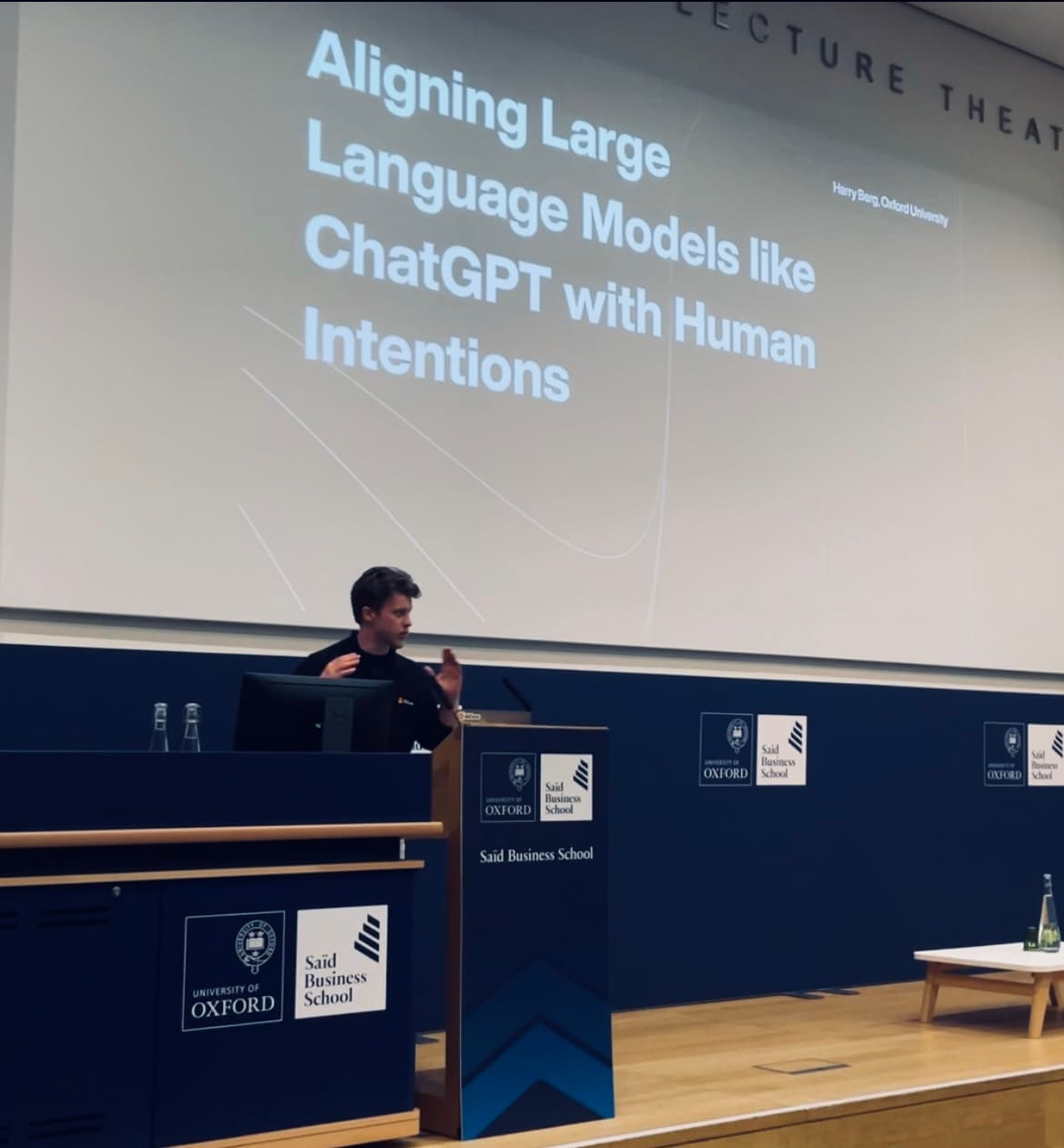
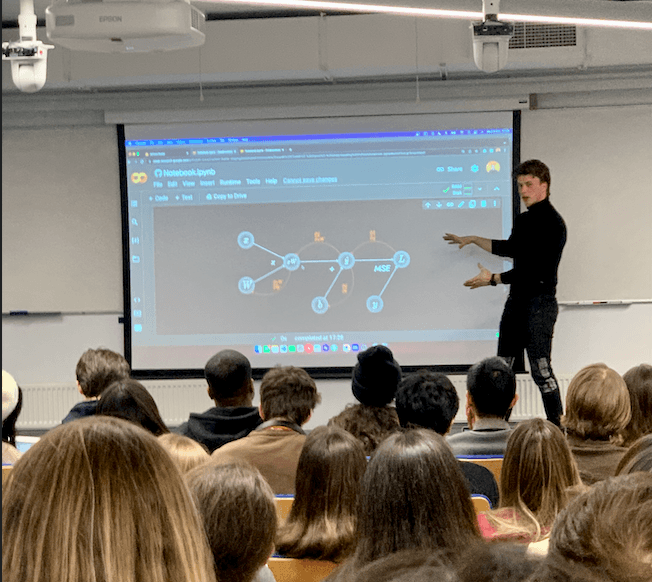
Co-founded Imperial's Machine Learning Society and built a live-coding lecture format that spread to UCL, King's, LSE, Harvard, Cambridge, and Oxford.
Served as NVIDIA's Ambassador to Imperial College London, connecting the student AI community with one of the core companies behind modern accelerated computing.

Built inside a Y Combinator-backed startup in Silicon Valley, gaining direct exposure to venture-backed company building and founder operating pressure.
Co-built AI Core into a bootstrapped AI education business with roughly 30 employees, thousands of students trained each year, millions in revenue, and a negotiated exit.

Advised companies, PE-backed businesses, and private-equity firms on AI strategy, value creation, and practical implementation after exiting AI Core.

Advises senior leadership at the Saudi Data and AI Authority on national AI initiatives, prototypes, and advanced agentic software.
Curriculum
Four connected weeks.
Week 1
10 itemsUnderstanding AI
Focus
A plain-English map of what modern AI systems are, how they do work, and where the real risks and costs sit.
Agenda preview
- 01Learn to use Codex or Claude Code like a power user.
- 02See how my personal AI setup 10xs productivity by combining 20+ skills, persistent graph memory, dozens of automations, and voice workflows.
- 03Get clear on the difference between AI, ML, LLMs, agents, harnesses, MCPs, and plugins, so you know what you are buying.
- 04Recognize how some people are getting 100x more work done with AI, and what you need to catch up.
- 05See examples of real capability vs hype, demos, vendor claims, and LinkedIn noise.
- 06Know what actually costs money: subscriptions, tokens, context, tool calls, retries, and human cleanup.
- 07Understand why AI forgets things, loses context, makes things up, and needs better inputs than ordinary software.
- 08See how models do real work by using your apps: browsing, reading files, writing code, calling tools, and operating software.
- 09Recognize the real cybersecurity risks: data leakage, prompt injection, tool abuse, impersonation, and unsafe autonomy.
- 10Compare ChatGPT, Claude, Codex, and local agents by the jobs they are actually good for.
Outcome
You can separate useful capability from hype and make better decisions about tools, vendors, and internal AI work.
Week 2
7 itemsYour Personal AI Setup
Focus
Set up the personal AI layer: memory, skills, protocols, live context, and automations that fit your own work.
Agenda preview
- 01Clone my full personal AI setup: fast to install, simple to use, and sophisticated under the hood.
- 02Steal my 20+ everyday skills files and adapt them to your own work.
- 03Stop repeating yourself: persistent memory saves you hours of re-explaining context, preferences, and details.
- 04Configure your AI to "dream" so its memory maintains itself instead of becoming another system you have to manage.
- 05Define your personal protocol so your AI works the way you do.
- 06Connect your AI to live context so it stays current without constant prompting.
- 07Create proactive automations so your AI moves from a tool you use to a system working for you.
Outcome
You leave with the shape of a personal AI system that can remember context, reuse your preferences, and support recurring tasks.
Week 3
8 itemsAI Project Development
Focus
Move from personal setup to project structure: departments, subagents, templates, deployment patterns, and parallel work.
Agenda preview
- 01Maximize AI leverage by copying my AI-native project structure.
- 02Set up AI-native departments for managing different functions across marketing, software, operations, and research.
- 03Clone my 10 specialized AI subagents that work like different members of your team.
- 04Simplify your tech stack with my template, based on 10 years of building AI systems.
- 05Reset your standards for what "productive" means in 2026.
- 06Maximize productivity with expert tips, techniques, and skills files for running parallel agents.
- 07Get my recipe for where and how to deploy AI systems to your team or the world.
- 08Let your AI manage infrastructure for you so you are not jumping between 10 different apps.
Outcome
You understand how to organize AI-assisted projects so agents can help across marketing, software, operations, and research.
Week 4
7 itemsSoftware Foundations
Focus
Learn the software foundations behind AI-native work: APIs, GitHub, local and remote development, jobs, and deployment choices.
Agenda preview
- 01Understand the key parts of a software project so AI-generated code stops feeling like a black box.
- 02Get clear on APIs as the bridge between models, apps, databases, and internal systems.
- 03Use Git and GitHub as the control plane for review, rollback, collaboration, and agent-led software work.
- 04Understand local vs remote development so you know where work is happening and what can safely run where.
- 05Use cron jobs and background workers to make software run on a schedule without you triggering it.
- 06Understand local models, private servers, and air-gapped deployments for secure AI systems.
- 07Know what to own, what to outsource, and what to keep private when deploying AI software.
Outcome
You can reason about where AI-generated systems run, how they connect, and what you should own or keep private.
Structure
Four weeks, one steady cadence.
Outcome: a working understanding of AI literacy, personal system design, development operations, and infrastructure ownership as one connected stack.
Four sessions
Four weekly evening sessions.
Regular rhythm
One regular time each week.
Small group
Built around practical setup and real workflows.
Light build work
Simple between-session work so each participant builds their own stack.
Next step
Register your interest.
Share your details to take the next steps, get more information, or book a call.